Bota Jardemalie on Surveillance, Exile, and Persecution
What a decade of state persecution teaches about tools of surveillance and control.
Logos

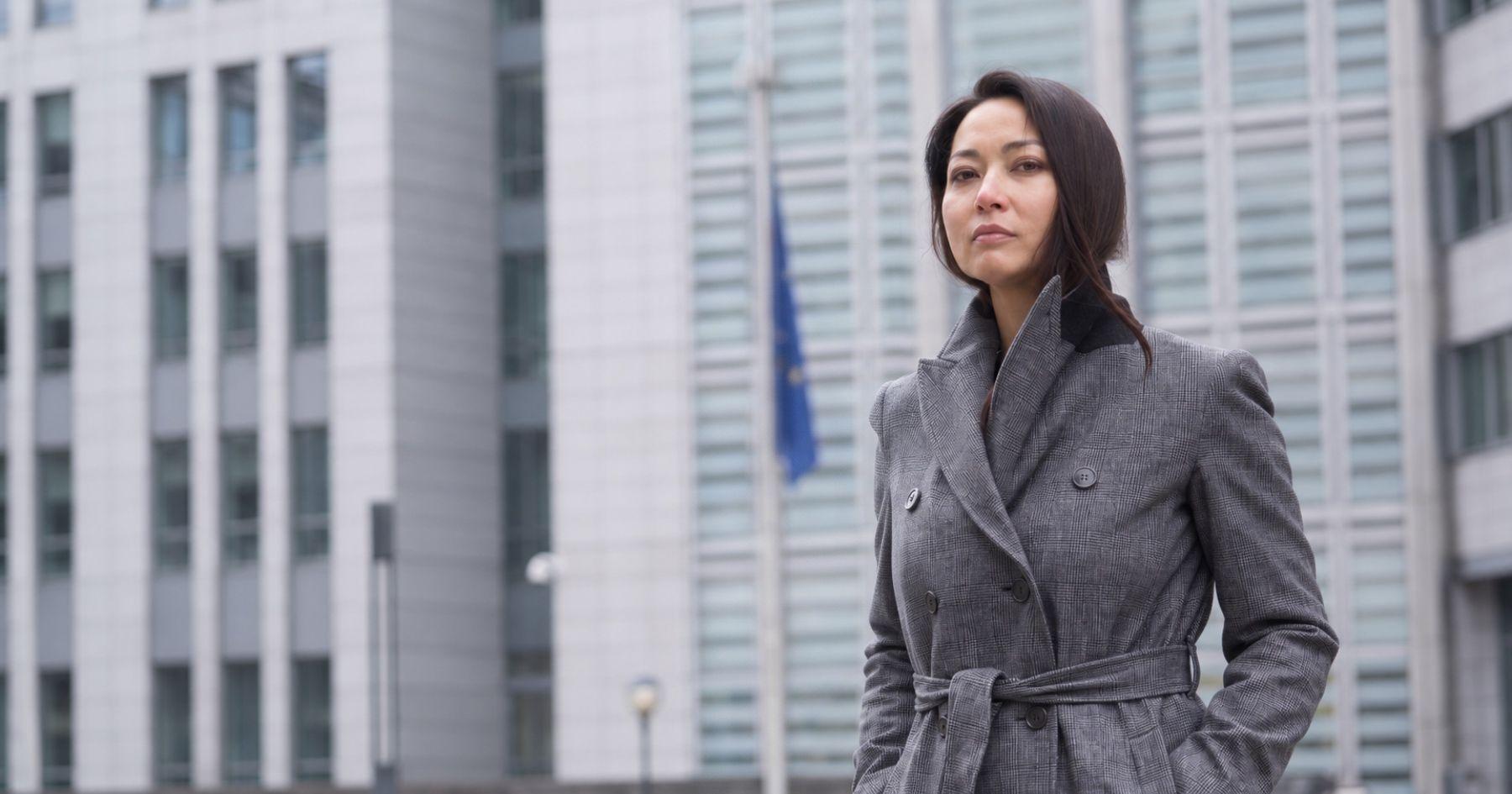
Companion piece to our interview with Bota Jardemalie. Watch the full conversation here.
Last week we sat down with Bota Jardemalie, a Kazakh human rights lawyer living under political asylum in Belgium. Near the end of the conversation she mentioned, almost in passing, that the European Parliament would vote the next day on reviving chat control, the legislation that lets platforms scan private messages. It had already been rejected twice, but this time she said they were using procedural tricks, and it would most likely pass.
It passed. On July 9, 314 MEPs voted against reviving the scanning regime and 276 voted for it. It passed anyway, because rejection required an absolute majority of 361, and every absent member counted as a yes.
Bota has spent over a decade learning exactly how systems like this get used once they exist. Her story is worth your time in full, but here is the outline of it.
One intercepted Skype call
Jardemalie is a Harvard Law graduate and a New York-qualified attorney. For years, she did international advocacy for the Kazakh opposition and victims of torture: bringing cases to the US State Department, Congress, the UN, anywhere a light could be shined on a regime that has no independent judiciary or press to shine one itself.
In 2013, she took on the case of Alma Shalabayeva, the wife of a Kazakh opposition leader, who was grabbed along with her six-year-old daughter in a night raid in Italy, put on a private plane chartered by the Kazakh embassy, and flown to Kazakhstan. A UN expert called it an extraordinary rendition. Kazakh diplomats had conspired with high-ranking Italian police officials to make it happen.
The moment Shalabayeva landed in Kazakhstan, Jardemalie contacted her over Skype to take her testimony. First-hand testimony, recorded early, is what a case like this lives or dies on. They spent hours going through the details of the kidnapping.
But the call was compromised.
“I had such a big trust in technology,” she said. “I thought that if we’re on Skype, that’s it. It’s not like a landline. We can speak freely and nobody will know.”
Within a week, her passport photo was on the front pages of Kazakh newspapers, framing her as a member of an organised criminal group. Within a month, she was on Interpol’s red notice list, an international fugitive, for doing what a lawyer is supposed to do: taking the testimony of a victim. She applied for asylum in Belgium because that’s where she was when she learned she was in danger, and that’s how asylum law works.
“That taught me a very important lesson. You have to control your channel of communication. If you don’t control your channel of communication, you become extremely vulnerable to any abusers. It’s not necessarily the state. It can be a competitor.”
One intercepted call was all it took.
Punishment through procedure
The case itself ended about as well as these things can. Shalabayeva and her daughter were released within six months and returned to Italy, where they received asylum. Six people were convicted of aggravated kidnapping. The scandal nearly collapsed the Italian government.
What happened to Jardemalie afterward is a catalogue of what a state with unlimited resources can do to one person on Western soil, legally and otherwise:
Belgium refused Kazakhstan’s extradition request. Interpol reviewed her file, recognised the persecution as politically motivated, and removed her from the database. So Kazakhstan hired people to kidnap her from Belgian territory instead. Belgian federal police caught them: two Germans and a Russian. The Germans were former Stasi officers, in their sixties, doing in retirement what they did before the Wall fell. A former UK Royal Marine rented the apartment across the street from hers, seventh floor facing seventh floor, and filmed inside her home. Her lawyers were hacked. A junior lawyer was approached with a bribe for her file. So was her real estate agent.
When kidnapping didn’t work, her former employer, a Kazakh bank acting as a state proxy, filed a criminal complaint in Belgium accusing her of laundering half a billion dollars. The number was chosen to be outrageous enough that maybe a case would be opened and she would have to sit in pretrial detention for two years. The instructing judge dismissed it. They appealed and were dismissed. They appealed again – were dismissed again. Two law firms, one in Paris directing one in Brussels and ten years of procedure.
“Case dismissed, case dismissed, case dismissed, but they’re appealing, appealing, appealing. That’s what they’ve been doing to me. And it was legal.”
At the appeal stage, Kazakhstan dumped thousands of pages of documents on the court, including what they claimed were her emails, recovered late, they said, from a hidden server. She opened the file properties, and the creation dates and author names were right there.
“It was mind-blowing how reckless and how confident they were. Like nobody checks properties of files. I don’t know why people wouldn’t check. I checked.”
And when none of that worked, they arrested her older brother in Kazakhstan, charged him with money laundering too, and told him he’d be released if he convinced his sister to come home.
He refused. Two secret service officers took him from his cell to a basement. They made threats against his father, against his 20-year-old son. He suffered broken ribs, a mock hanging. He still refused. She asked him why, after his release (won through international pressure, including a bipartisan letter from the US Senate). He said: “I knew that if I cooperate, you probably come, and we both will never leave.”
General-purpose tools of oppression
It would be comfortable to file this under “authoritarian regimes are bad” and move on. Bota won’t let you. The mechanisms that were turned on her are general-purpose, and they’re not staying in Central Asia.
Opposition movements in Kazakhstan can’t take funding from business people anymore, because business people who fund dissent lose their businesses. So movements run on crowdfunding, donations as small as $35. They used to post account information on social media, but they can’t now.
“The regime uses banks as their agent. Banks immediately freeze accounts used for any political purposes, the information is transferred to the secret service, and the secret service knows everyone who donated.”
Activists moved to Bitcoin, Monero, whatever people were willing to use.
After September 11, the regime’s charge of choice for activists was terrorism. Now, it’s money laundering.
“You don’t need to prove the underlying crime. As long as you have transactions, they can build something.”
Everyone has a bank account, and a Western-trained lawyer accused of a financial crime is easy to sell. The definitions slide to fit the target: extremism covers a call to protest, money laundering covers a crowdfunding campaign, and what’s acceptable today gets reclassified tomorrow.
Platforms operating in Kazakhstan are required by law to have in-country representatives, who remove “extremist” content on government request. Bota sees the same architecture going up in Europe under friendlier names. Harmful content under the Digital Services Act. Child protection under chat control.
“You create the tools. Those tools at some point will be used for broader purposes. As long as you’re creating this infrastructure, the government will have more and more appetite to use them.”
Escape used to be geographic: people like Bota, like the families of many of us, escaped oppressive regimes by physically moving to freer countries. That exit is closing, not because the West is becoming Kazakhstan, but because it’s building infrastructure that centralises power and is capable of the same oppression.
“They’re building the infrastructure. We don’t know what kind of people are going to come into power tomorrow. In some countries of the EU, we’re one election away from some quite authoritarian people coming into power.”
The EU vote on chat control the next day passed, with 314 against, 276 for.
Logos charts a new course
Bota ended the interview with a request: “We need to work with developers who can explain why this type of attack on our privacy is dangerous.” So here’s our side of that handshake.
At every point of her persecution, Bota was compromised by a channel someone else controlled. Skype was Microsoft’s channel, and it was tapped. The bank account was the state’s channel, and it froze donors and delivered their names to the secret service. Social media was subject to local jurisdiction, and its in-country representative took down posts. Each tool had a third party in the middle, and the third party could be pressured.
Logos is a stack for building applications where there is no third party to pressure: private, censorship-resistant messaging; decentralised storage and file transfer; a blockchain that protects the privacy of participants, including the people who operate it; and a mixnet underneath so that observers can’t see who is talking to whom.
No in-country representatives, no centralised web server, no one able to freeze or revoke accounts or messages.
None of this would have saved her from a decade of persecution – a regime that will torture your brother has options beyond digital protocols – but it was specific, technical failures in centralised services that gave them their opening: an intercepted call, a surveilled donor list, a removable post. Those are solvable.
Bota remains a strong advocate of privacy-preserving technology. Returning to the topic of the EU’s chat control regulation, she said the bill’s passage was a bad precedent but not the end, that European citizens can still fight before it becomes a permanent system, and that this fight is exactly where human rights defenders and developers need each other.
Watch the full interview. For more on Logos and how to get involved, follow us on X.
Discussion
Logos
Logos
Logos
Logos
Logos
Logos
Logos
Logos
Logos
Logos