Logos Circles Nigeria: Upskilling & Support from Abeokuta to Enugu
When institutions fall short, Logos Circles take action without waiting for permission
Bathang


Logos Circles are communities springing up around the world that take action rather than waiting for someone else to help them. They organise around local issues and build support systems where institutions are failing people.
In Nigeria, two Circles are doing exactly that.
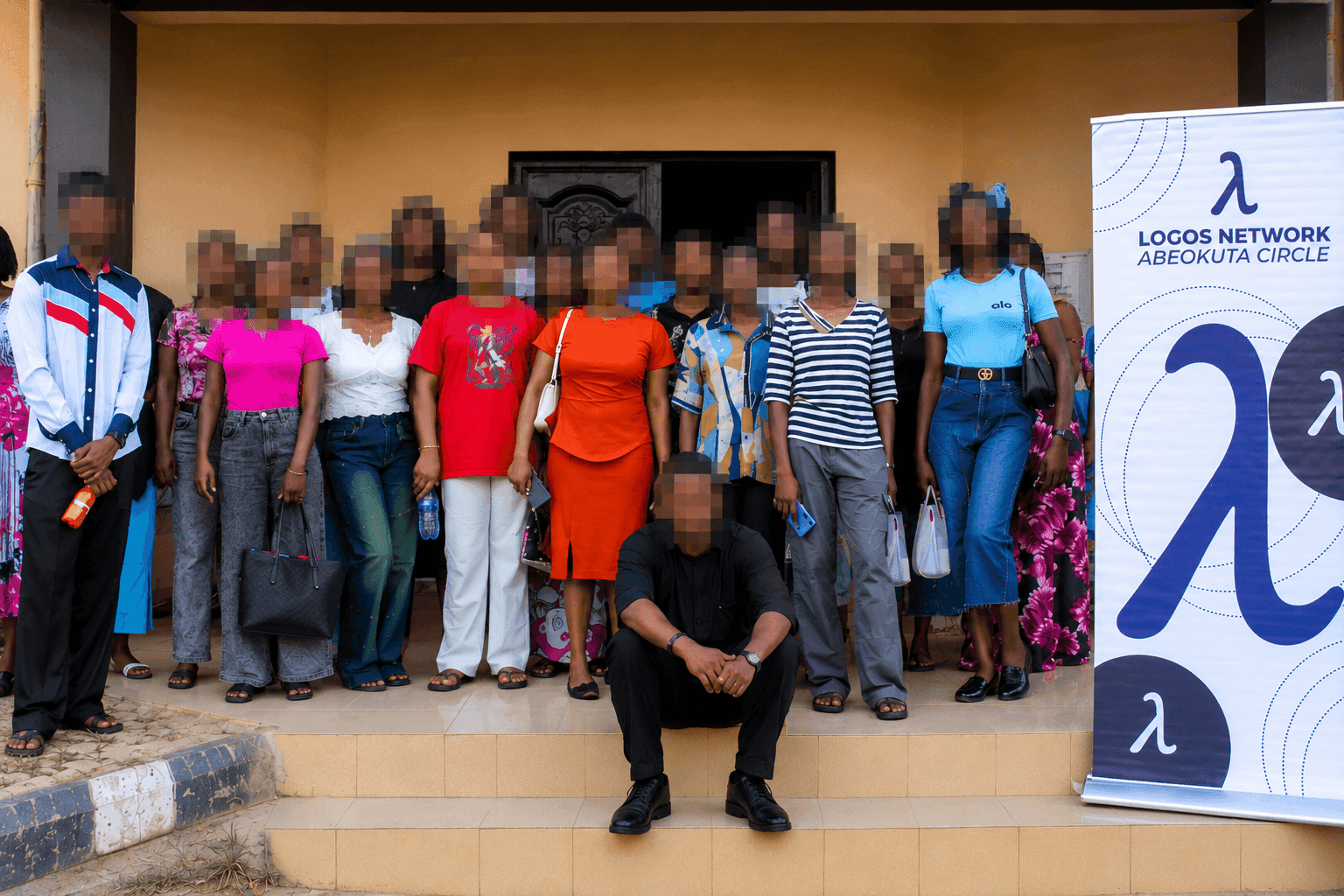
Logos Circle / Abeokuta is raising funds to support 20 to 30 young women with online training in entrepreneurship and digital business. Meanwhile, Logos Circle / Enugu is building privacy-preserving mental health support infrastructure.
Each clearly demonstrates what Logos Circles are designed to be: local engines of collective action, built by the people closest to the problem.
If you're inspired by these stories, consider joining a Logos Circle near you or creating your own. The movement needs you.
Upskilling Abeokuta
Logos Circle / Abeokuta is raising funds to help 20 to 30 young women gain digital business and entrepreneurial skills. The initiative grew out of conversations within the community about unemployment; limited access to training; and the growing importance of remote work, online commerce, and the digital skills required to engage in them.
For Austine, steward of Logos Circle / Abeokuta, entrepreneurial education is about giving young women the tools to participate more fully in local economic life:

Many women in Abeokuta already run small businesses, but they often do so without the infrastructure needed for those businesses to grow. Austine pointed to limited access to start-up capital, inadequate business training, restricted access to digital tools, and difficulty reaching wider markets as common painpoints.
These barriers are compounded by the fact that many young women must balance education, family duties, and social expectations alongside their businesses. Without mentorship, networks, or structured training, it becomes harder to turn existing ambition into sustainable growth.
Rather than waiting for large institutions or government programmes to intervene, Logos Circle / Abeokuta is building a direct pathway for women to strengthen their own economic independence.
The fundraiser is being coordinated through FundBrave, a donation platform created by Logos Circle / Benin members. Austine commented on the decision to coordinate the fundraiser on FundBrave:
The Circle estimates that between $1,000 and $2,500 could fund the first programme of online courses in entrepreneurship and digital business.
The first cohort of students seems to be responding positively to the initiative, according to Austine, with many expressing appreciation for the opportunity to access training that would otherwise remain out of reach.
Although not currently building on it, Austine mentioned plans to explore how Logos Circle / Abeokuta could deploy the educational initiative on the Logos tech stack in the future. He also commented that Logos and its technologies would become part of the curriculum, providing students with foundational knowledge about how such systems protect their users and infrastructure providers.
Contribute to the Logos Circle / Abeokuta fundraiser via FundBrave now.
Enugu takes aim at mental health support barriers
Five hundred kilometres east of Abeokuta, Logos Circle / Enugu is confronting another challenge affecting young Nigerians: access to mental health support.
For Destiny, the steward of Logos Circle / Enugu, the problem is not only the shortage of professional care. It is the combination of cost, stigma, weak infrastructure, and fear of exposure. He told us:


Many Nigerian students and young people avoid seeking support because they fear being judged, misunderstood, or exposed. In some communities, depression is dismissed as laziness or framed as a spiritual problem. Seeking therapy can also carry social risk, especially when privacy is fragile, and information spreads quickly through informal networks.
For Logos Circle / Enugu, privacy is not an optional feature. It’s central to whether people feel safe enough to ask for support at all. Destiny continued:
The Circle is building what Destiny describes as the kind of support system its members wish had existed when their own friends needed help. He continued:
The plans include an anonymous peer-support channel, a public mental health resource library, and a therapy subsidy fund for students who can’t afford professional care. As a byproduct of its default privacy across all the layers of the stack, the initiative is well-suited to deployment on Logos tech.
The aim is not to replace therapists or formal services, but to create a trusted entry point: a place where young people can speak, find resources, receive peer support, and be connected to trained professionals when needed.
Partnership proposals have already been drafted and sent for review. The Circle is hoping to work with the University of Nigeria’s Department of Psychology and Bespoke Therapeutic Consults, a local mental health research initiative, which may be able to help with training and referrals.
By working with the university, Logos Circle / Enugu hopes to better understand student needs through surveys and awareness efforts, while building trust around the use of psychological services and peer-support groups. It also plans to reach out to other universities with established mental health centres to explore how alternative support systems can strengthen existing infrastructure.
Destiny commented on the response to the Circle in the local community:
Building what communities actually value
While the projects in Abeokuta and Enugu focus on different issues, they both share a mindset: communities shouldn’t remain passive and hope for outside intervention to solve their problems. They can take action themselves.
The approach is rooted in self-reliance, local agency, and peer coordination. It begins by identifying problems close to home, then building systems that people can actually use.
Rather than framing change as something that only comes from governments, corporations, or major NGOs, Circles from London and LA to Benin and Barcelona are demonstrating how organised communities can create practical alternatives themselves.
Start local. Focus on real problems. Build what the community needs.
Take action. Don’t wait for permission.
Discussion
Logos
G IRL
Logos
Bathang
Bathang
Bathang
Bathang
Bathang
Bathang
Bathang