Parallel Education and Effective Community Action in Delhi
Taking grassroots action to fill gaps in Delhi’s education system with Logos Circle / Delhi
Bathang

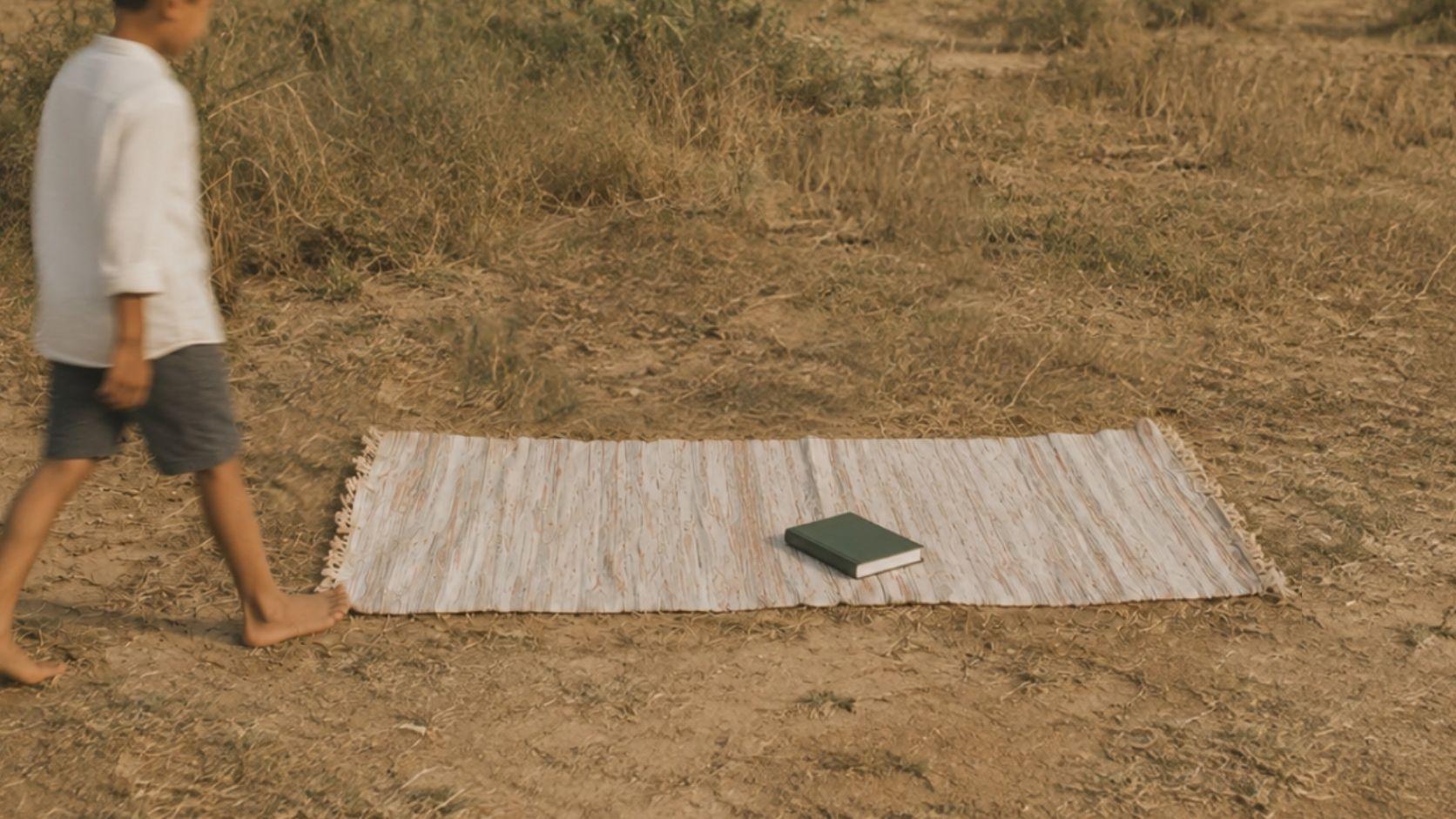
The most impactful community initiatives rarely start with endless planning behind closed doors. That’s what legacy institutions do, and if it were effective, we wouldn’t need Logos Circles. Instead, they start by getting out there, finding the people who need support and listening to the challenges they face. Logos Circles / Delhi did exactly that. Their work with a local volunteer-led education initiative is truly inspiring and should serve as a blueprint for others to follow.
Their approach perfectly encapsulates what Logos Circles are: self-organised local groups taking practical action on issues that matter to their communities. They don’t wait for permission to get stuck in. For Logos Circle / Delhi, that meant supporting a group of volunteers already teaching children at risk of falling through gaps in the Indian capital’s education system, in the open air – literally under a tree – and asking what would help make their work more stable.
The Circle began with a site visit: sitting in on classes, speaking with the volunteers and children, identifying challenges, and running a small drive for notebooks and learning materials. Going forward, Logos Circle / Delhi aims to help turn the informal tuition group into a stable community learning hub, with a reliable tutor roster, a fixed schedule, consistent supplies, basic learning-progress tracking, and eventually a space that can keep classes running through Delhi’s monsoon season.
They quickly moved from identifying the problem to getting involved in an easy but high-impact way. The Circle didn’t take on something grandiose and try to build a solution from scratch. They found an existing community initiative and asked how they could help it survive and grow. The Circle is also running a Logos node and beginning to explore where the Logos stack can strengthen the coordination layer around the project.
Logos Circle / Delhi’s steward Devisha shared what they’ve learned about effective grassroots planning and how their approach can be replicated elsewhere.
Community action and parallel organising with Logos Circle / Delhi
Hey Devisha, thanks for taking the time to talk about the work Logos Circle / Delhi is involved with. Let’s dive right in.
Hi. Yeah, let’s do it!
How did you discover the education initiative, and why did you pick it to focus the Delhi Circle’s energy on first?
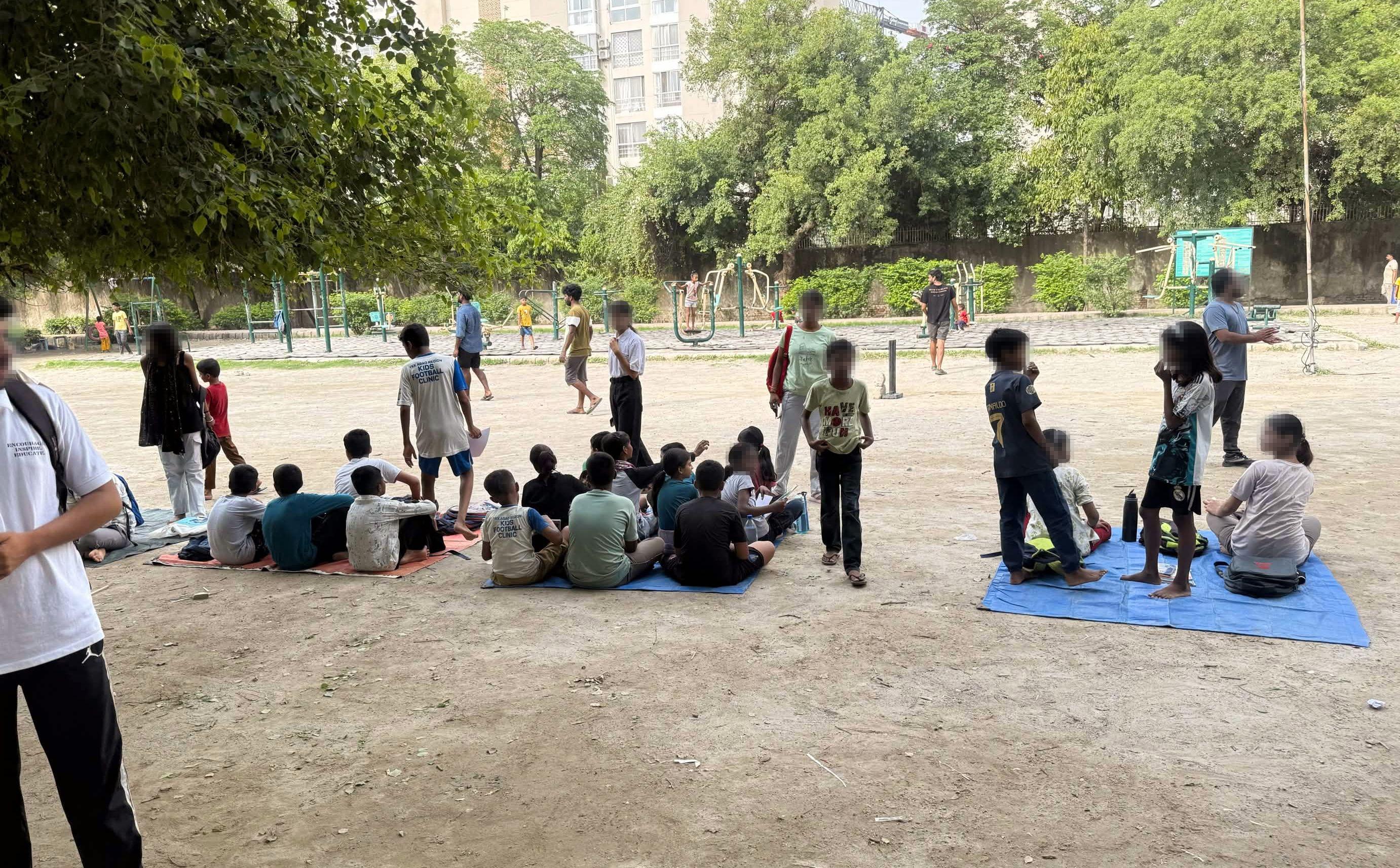
We found it through a friend, who saw that these classes were going on near society in an open ground, where a group of volunteers were already running open-air tuition classes for children in Delhi NCR, quite literally under a tree. No building, no funding, no institution behind them. Just people who decided these children shouldn't go untaught.
We picked it because it was already alive. When our Circle sat down to choose a winnable issue, a lot of ideas on the table were things we'd have to build from zero; this one wasn't. The community had already responded to a failure of the formal system by organising its own answer. It just had no support structure to keep it standing.
That felt like exactly the kind of thing a Circle should exist for. We're not there to arrive with a solution and tell a community what it needs. We're there to find something people are already doing against the odds and make it durable. It's also unambiguously winnable: we can't fix education in Delhi, but we can help one learning group go from fragile to stable, and we'll be able to point at the difference.

Can you briefly describe the problems with education in and around Delhi?
The headline numbers make Delhi look better than it is. Enrolment is high, and the secondary dropout rate is around 4.8%, which sounds manageable. But two things hide underneath that.
First, being enrolled and being educated are not the same thing. India's larger learning crisis is well documented – large numbers of children sit in classrooms for years without reaching grade-level reading or arithmetic. Delhi has historically scored below the national average on learning outcomes, and it sits in the middle band on the government's own Performance Grading Index for 2025-26. The Delhi government itself has said it is working to identify around 750,000 students with learning gaps. That's an admission of scale from the system itself.
Second, the children we work with often don't appear in the statistics at all. Migrant families, children of daily-wage workers, kids who dropped out between Class 5 and Class 6, children whose families move between cities and lose their school seat in the process.
There were roughly 30,000 students in one year alone who finished Class 5 and never entered Class 6. Those children don't show up as a dropout crisis in a dashboard. They just quietly disappear from the pipeline.
There's also a capacity problem. Vacant principal and teacher posts in Delhi government schools have been flagged repeatedly. So, even the children inside the system are often in overcrowded classrooms with no individual attention. The gap isn't only access. It's attention.
Does the education initiative that the Circle is supporting target a specific student demographic?
Yes. For now, we're focused on students in grades 7 to 10, and that's a deliberate decision driven by what we can actually deliver well.
Our volunteers currently have subject expertise in maths, English, and science at that level. We could have spread ourselves across every age group that turns up, but we'd have done it badly. Teaching a Class 9 student science and teaching a six-year-old to read are completely different skills, and pretending otherwise helps nobody. We'd rather do a narrow thing properly than a broad thing thinly.
There's also a timing argument for this band. Grades 7 to 10 are where children are most at risk of falling away permanently; it's the stage where accumulated gaps become unmanageable, where the pressure to start earning kicks in, and where a child who's struggling decides school isn't for them. Catching someone at Class 8 who is two years behind is hard, but very doable.
This is a starting point, not a policy. As we onboard more volunteers with different subject strengths, particularly foundational literacy for the younger children, we'll widen the age range. The constraint is our capacity, not the need. The need is for every age.
Is the education based on a specific curriculum, or is it more general to allow disadvantaged children to catch up?
It's a mix, and the balance shifts by student. Because we're working with grades 7 to 10, the NCERT/state board syllabus matters. These students are heading towards board exams, and teaching them something disconnected from what they'll be assessed on would be unfair to them. So, the subjects our volunteers teach – maths, English, science – track the standard curriculum for those grades.
Sitting in on the classes, this was one of the things we specifically went to understand: what they teach, in what order, and where it breaks down. The honest answer is that the curriculum is currently held in the heads of the volunteers rather than written down anywhere. That's one of the gaps we want to help close: not to impose a syllabus from outside, but to help them document what they're already doing so it survives any individual volunteer leaving, and so progress can actually be measured.

How was the Circle's help received by the organisers and children?
It was our first session, so we just went, sat, listened, and asked questions about what are the gaps in their education.
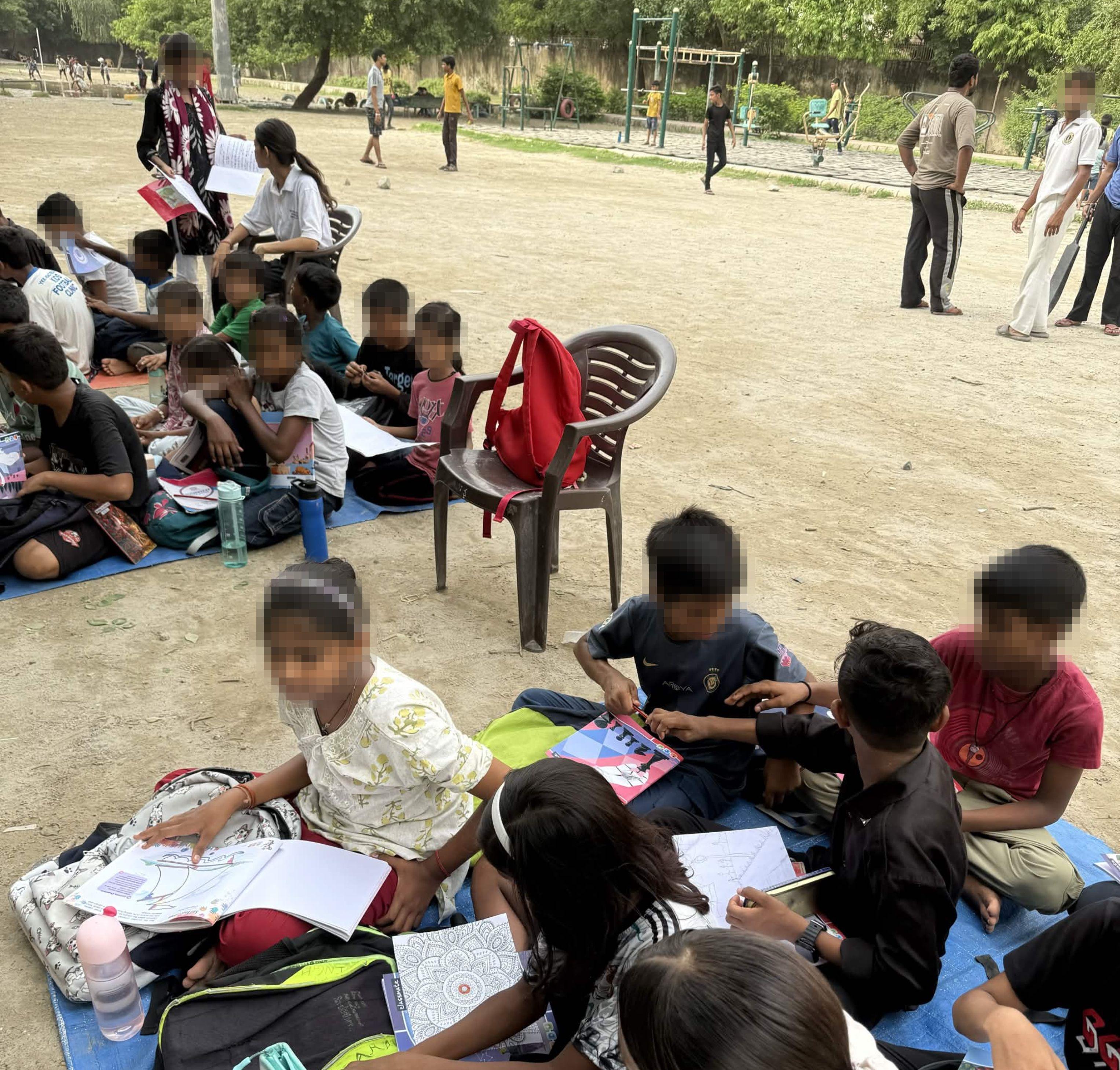
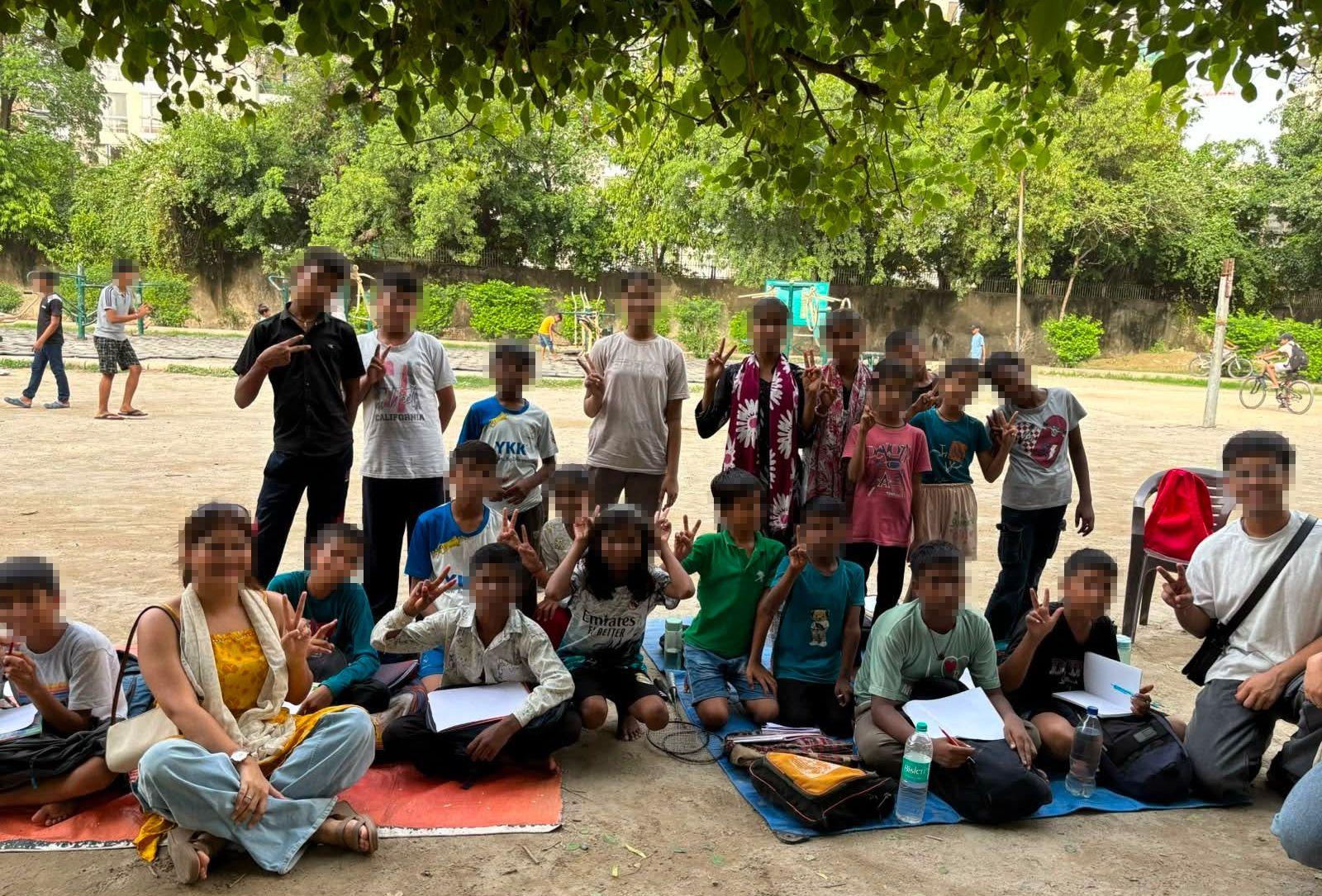
Five of our volunteers spent the day with around 65 children in genuinely brutal heat. We sat with them, went through what they were learning, and ran a small supplies drive: notebooks and basic materials.
The organisers have been doing this without help for a long time. Our position from the first conversation was that they are the institution and we're there to make their work sustainable. Once that landed, the conversation became very practical very quickly: what they actually need, what breaks every month, what they've never had time to fix.
The children showing up at all is the part I'd emphasise. Nobody makes them come. There's no register, no consequence for skipping. They walked through 40-plus degree heat because someone said there'd be a class. That tells you the demand isn't the problem.
Is Logos Circle / Delhi’s initiative reproducible by other Circles? How should Circle stewards go about doing so?
Very reproducible, probably more than most Circle projects, because the pattern doesn't depend on anything specific to Delhi. Almost every city has a version of this: a community already running something the state should be running, held together by a handful of unpaid people.
What I'd tell another steward:
- Look for what already exists before you invent anything. The instinct is to design a project. Walk your area and find the people already doing the work. Supporting an existing effort is faster, cheaper, and far more likely to survive than launching your own.
- First visit: Sit, watch, ask. You'll learn the real problems, which are almost never the ones you assumed.
- Talk to the organisers as partners. They've solved problems you haven't thought about yet. Ask what breaks: the answers are more useful.
- Choose a winnable version. Not “fix education”. Ours is: in six months, turn an informal tuition group into a stable learning hub with fixed schedule, tutor roster, progress tracking, reliable supplies. Small enough to actually finish.
- Fix consistency before you fix anything else. A predictable weekly slot is worth more than a large one-off donation. Most of these efforts don't die from lack of money; they die from irregularity.
- Document from day one. Baseline numbers, photos, notes.
What would make the biggest difference to the children’s education if it arrived tomorrow?
Three things, in this order:
Committed volunteer tutors. This is the binding constraint. Five volunteers for 30-45 children is not a ratio at which anyone learns to read. Ten reliable people who show up every week would transform outcomes more than any amount of equipment. And “committed” matters more than “qualified”. Consistency beats credentials with these children.
A monsoon-proof space. Right now, the classroom is a tree. That works for part of the year, and then it doesn't. A shared room, a community hall, even a covered courtyard would take an entire category of disruption off the table.
A recurring supplies pipeline instead of one-off drives. We did a notebook distribution and it was lovely, but it's not a system. A small, predictable monthly budget sponsored by a few people rather than donated in a burst would mean nobody has to teach without materials again.
Is there scope for Logos technologies to be incorporated into the initiative?
Yes, but not with the children, as most of them don't have phones or computers; the beneficiaries are not online, but the technology serves the coordination layer around them. That layer is real, and it has real problems:
- Tutor and volunteer coordination.
- A materials archive on Logos Storage.
- Transparent community funding. For the supplies pipeline and eventually the learning space. We're watching what Circle / Benin built with FundBrave, and Circle / Abeokuta is using. Small-donor education funding in India has a real trust problem: people want to give but don't believe that the money actually arrives. Transparent, auditable allocation is a direct answer to that.
How did you find the Logos node setup process?
Honestly, it was more approachable than I expected. Running it through Basecamp meant I didn't have to touch a command line. It's a normal desktop install, and the node dashboard is built in. Also, thanks to Alisher for guiding me step by step on it.

The Indian government plans to upgrade many school libraries and classrooms this year. What do you think? Will it close the gap? Will initiatives like Logos Circle / Delhi’s still be needed?
I think it's genuinely good news, and I don't want to be cynical about it. Delhi is upgrading 125 school libraries with digital devices and kiosks, and setting up thousands of smart classrooms. But it won't close the gap, for a simple structural reason: these upgrades reach children who are inside the system. The children we teach are outside it.
A smart classroom does nothing for a child who isn't enrolled. A digital library doesn't help a girl who left after Class 5 when her family migrated, or a boy whose parents need him working by afternoon. Infrastructure improves the experience of the enrolled. It doesn't reach the ones who fell out.
The children we work with don't primarily lack devices. They lack an adult with time who knows exactly where they're stuck. That's not something you can procure.
So yes, initiatives like this will still be needed, and I'd argue the two aren't in competition. The ideal outcome isn't that we replace the state; it's that we catch the children the state's programmes structurally can't reach, and where possible get them back into the system, ready to actually use those new libraries.
That's really what a parallel institution means to us. Not opposition, but coverage of the space the existing system doesn't reach.
Truly inspiring! Thanks for sharing your story, Devisha. Keep on doing amazing things.
Thank you! And anytime.
Inspired? Take action now
Logos Circle / Delhi is a testament to the power of grassroots collective action. They saw a problem and got to work. That’s the whole point of Logos Circles.
You can do the same in your local community. Propose a new Circle, take the steward training, and start making a difference where you live.
Join a Circle. Run Logos Basecamp.
Build the parallel.
Discussion
Logos
Logos
Bathang
Bathang
Bathang
Bathang
Bathang
Bathang
Bathang
Bathang